


Intro
The Ha Giang Loop can be done in either three or four days, and it’s a bigger decision than you might think.
Get it right, and you’ll spend your days at the right pace, in the right places, without feeling rushed or like you’re missing out. Get it wrong, and you might end up either short on time to enjoy the scenery or with a day to spare that didn’t need to be there.
The good news is our 3-day or 4-day Ha Giang Loop tours cover the same route through Ha Giang’s mountains. The difference comes down to pace, distance, and how far toward the border you go.
Here’s how to tell which one fits your trip.
What Is the Ha Giang Loop?
The popular loop is a multi-day motorbike route through Ha Giang, Vietnam’s northernmost province, right on the border with China.
Much of the route runs through the Dong Van Karst Plateau, Vietnam’s first UNESCO Global Geopark. It was recognized in 2010 for limestone formations that date back hundreds of millions of years.
The area is home to several ethnic groups, whose villages, markets, and traditions are as much a part of the experience as the scenery. Along the way, riders also pass landmarks like Ma Pi Leng Pass, the Nho Que River canyon, and Quan Ba’s “Heaven’s Gate.”
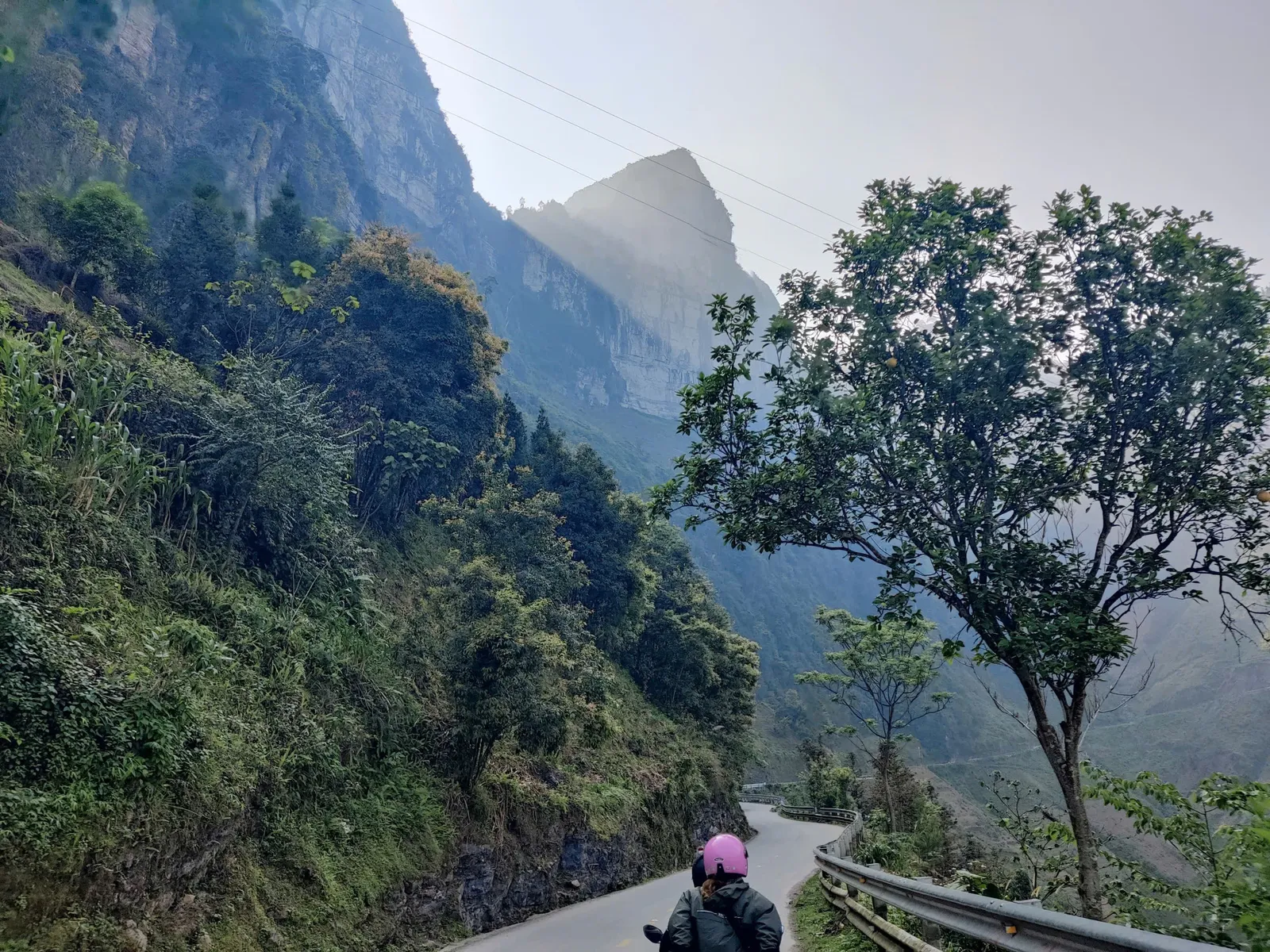
Most travelers tackle the loop in one of two ways. Self-driving is more thrilling, but it requires real motorbike experience and confidence on mountain roads.
The other option is riding pillion with an “easy rider,” a local guide who handles the driving so you can focus on the views. We handle everything on our guided tours. The only thing left for you to decide is how many days you want to spend on the loop.
Overview of Our 3-Day Ha Giang Loop Tour
The shorter version still covers the essential route. It goes through the same major stops most people picture when they think of Ha Giang, just packed into a tighter window.
Typical Itinerary
Day one runs from Ha Giang city out to Du Gia village. Day two continues through Mau Due, Meo Vac, and Ma Pi Leng Pass to Dong Van Old Town, and on the final day, you head back to Ha Giang city via Yen Minh and Quan Ba.
See the full itinerary for the detailed breakdown.
Main Highlights
- Ma Pi Leng Pass and the Nho Que River canyon
- Dong Van Old Town and its evening atmosphere
- A cozy homestay night in Du Gia village
- The Hmong King’s Palace (Vuong Family Mansion) or Lao Xa village
- Quan Ba’s Heaven’s Gate viewpoint
Daily Riding Time
Expect roughly 4 to 6 hours of riding per day, with day two being the longest and most scenic stretch.
Advantages
Three days is the more time-efficient option. We will cover the loop’s signature stops without an extra day off work or an extra night’s accommodation, which also keeps costs down.
It suits backpackers, travelers on a fixed schedule, or anyone who’s already used up time elsewhere in Vietnam and wants the highlights without committing an extra day.
Limitations
The trade-off is pace. Three days leave less buffer if the weather doesn’t cooperate or you simply want to spend more time somewhere.
The tour also skips Lung Cu, Vietnam’s northernmost point, along with some of the more remote villages and caves near the China border that the longer itinerary includes
Overview of Our 4-Day Ha Giang Loop Tour
This tour follows the same core route as the 3-day itinerary, but with an extra day that pushes further toward the China border and gives the whole trip a more relaxed pace.
Typical Itinerary
Day one mirrors the 3-day tour, running from Ha Giang to Du Gia, and day two covers the same Mau Due–Meo Vac–Ma Pi Leng–Dong Van stretch.
The extra day comes on day three, with a dedicated trip out to Lung Cu and nearby villages, followed by an overnight in Yen Minh or Nam Dam, before day four winds back to Ha Giang city via Quan Ba.
See the 4-Day 3-Night Ha Giang Loop Easy Rider itinerary for the complete day-by-day planning.
Main Highlights
Everything on the 3-day list, plus:
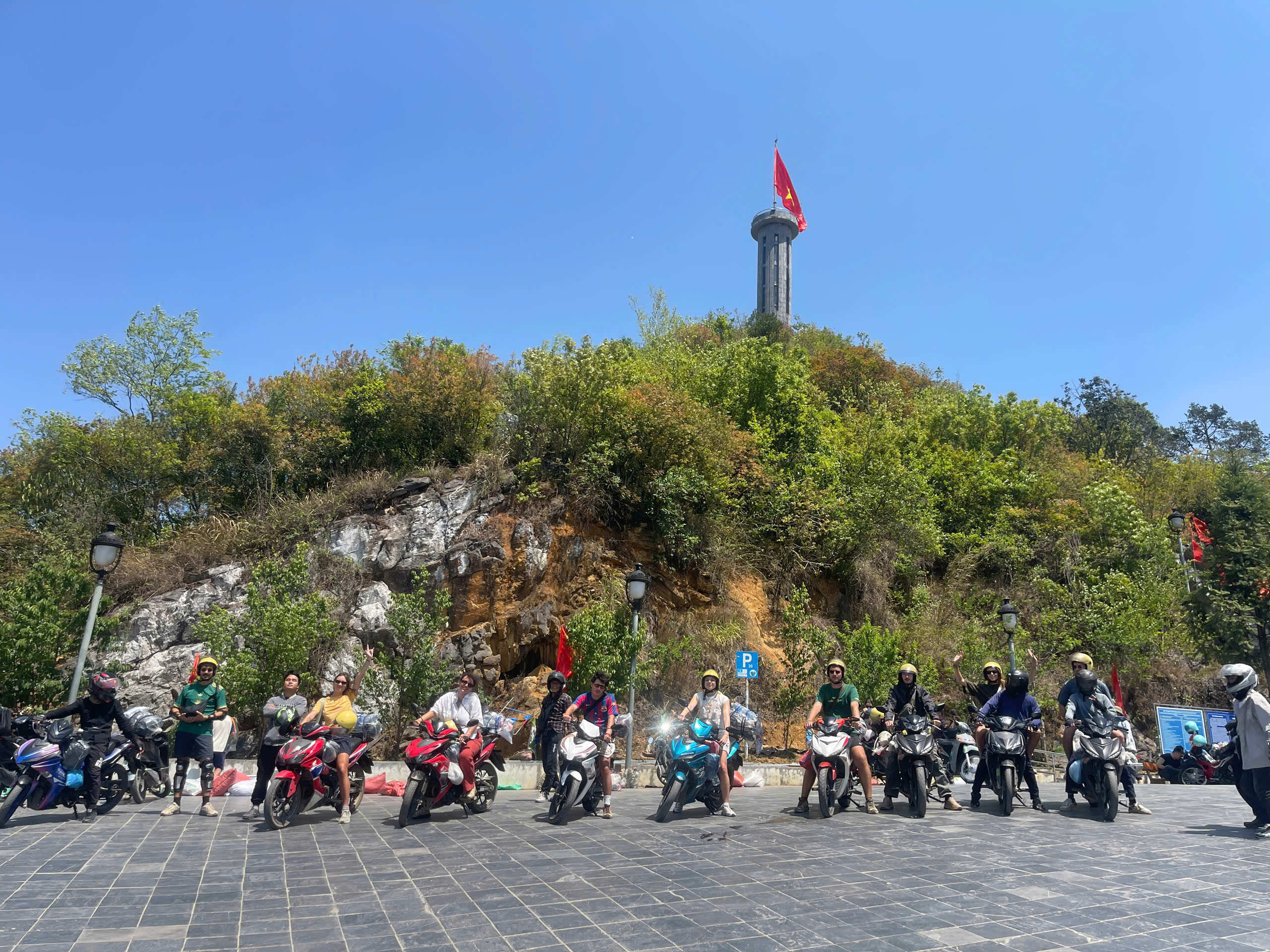
- The Lung Cu Flagpole, marking Vietnam’s northernmost point
- Hemp fabric-making villages like Lung Tam
- Lung Khuy Cave in Quan Ba
- An additional waterfall stop near Ha Thanh village
- An extra night in a village homestay (Nam Dam or Yen Minh)
Daily Riding Time
Daily riding hours are typically a bit lighter than on the 3-day tour, not longer overall. The same ground gets covered, just spread across an extra day with more stops along the way.
Advantages
The 4-day tour reaches closer to the Vietnam-China border, into areas most 3-day trips skip entirely. It provides you with more time at stops instead of rushing between them and more chances to visit different remote villages.
It also leaves a bigger buffer if rain or fog disrupts a day’s plans, which makes it a good fit for photographers, nature lovers, and travelers who want unhurried time in local communities.
Limitations
The trade-offs are cost and time: one more night of accommodation and one more day away from the rest of your trip.
Ha Giang Loop 3-Day vs 4-Day Tour Comparison
Laid side by side, the two tours aren’t really competing options so much as the same loop at two different speeds.
This table summarizes the practical differences and what they actually feel like on the road.
|
3-Day, 2-Night Trip |
4-Day, 3-Night Trip |
|
|---|---|---|
|
Duration |
3 days / 2 nights |
4 days / 3 nights |
|
Riding Time |
~4–6 hours/day, with longer riding stretches. |
~3–5 hours/day, allowing more breaks and sightseeing. |
|
Main Attractions |
Ma Pi Leng Pass, Dong Van Old Town, Du Gia village, Duong Thuong, M-slope road, Tham Ma Pass, Quan Ba Heaven’s Gate |
Everything in the 3-day tour, plus Lung Cu Flagpole, Lung Khuy Cave, extra waterfall and villages. |
|
Cultural Experiences |
One village homestay night, market and town stops |
Two village/homestay nights, more time to explore different communities |
|
Traveler Type |
Backpackers, first-time visitors, people |
Photographers, cultural explorers, slow travelers |
|
Budget |
Lower |
Higher |
Whichever you choose, both tours offer the authentic Ha Giang experience—riding through breathtaking mountain landscapes, staying in local homestays, and exploring with knowledgeable local guides. The 3-day and 4-day itineraries are also the two most popular choices, offering the best balance of time, highlights, and cultural experiences compared to shorter 2-day trips or longer 5–6 day adventures.
Which Tour Is Right for You?
There isn’t a single right answer here. The better fit depends less on budget and more on how much time you have and what kind of trip you’re after.
Travelers With Limited Time
If the Ha Giang Loop is just one destination on your packed Vietnam trip, the 3-day tour makes the most sense. It gives you enough time to take in the highlights without asking for an extra day off from your schedule.
Backpackers
Tight budgets and flexible-but-short timelines tend to point toward the 3-day option, too. It covers the loop’s essentials at a lower overall cost, which matters when every extra night adds up.
Couples
Honestly, it could go either way. Three days work well for couples who prefer a packed itinerary, while four days suit those who’d rather settle into a place and have more unhurried time together. Your travel pace matters more here than the fact that you’re traveling as a couple.
Solo Travelers
Solo travelers tend to divide much like couples do.
Some want the momentum of a quicker trip and the instant camaraderie of a compact group. Others use the extra day to ease into the experience and form more meaningful connections with fellow guests and hosts alike.
Photographers
The 4-day Ha Giang Loop tour is the stronger option. More time at each stop, less pressure to keep moving, and an additional leg through Lung Cu and the border villages that the shorter itinerary skips entirely.
Travelers Seeking Deeper Cultural Experiences
A second night in a homestay and more time on the ground in Hmong and Tay villages change the nature of the trip entirely. The 4-day tour suits anyone who’d rather slow down and engage than move quickly and observe from a distance.

Our Recommendation as Your Local Guides
Years of running both versions of this loop have taught us one thing: the most common regret is not taking the extra day.
A good number of travelers who book the 3-day tour come back at the end saying they wish they’d added the extra day. That’s not a sales pitch. It’s just what tends to happen once people get a taste of the route and realize how much more there is just past Dong Van.
A few situations where we’d specifically nudge you toward booking an extra day:
- The rainy season (from May to September) is when the weather can take a turn at any moment. The extra day gives you room to absorb a delayed start or a rerouted afternoon without the whole trip feeling rushed.
- If you’re not used to long stretches on a motorbike, spreading the distance over four days rather than three makes a real difference in how you feel by the end of each one.
But if your schedule simply doesn’t allow for a fourth day, don’t feel like you’re missing out. The route’s most memorable stretches are all included, and it’s more than enough to leave a strong impression.
Frequently Asked Questions
What Time of Year Is Best for the Ha Giang Loop?
Dry season (October through April) is the most popular time for our Ha Giang motorbike tours. The sweet spot is September to November, when rice terraces turn gold and buckwheat flowers color the hillsides through October.
How Safe Is the Ha Giang Loop?
Generally very safe when done with an experienced guide and a reliable bike. Mountain roads and weather are the variables to plan around.
Is the Ha Giang Loop a Good Choice for Solo Travelers?
Yes. You’ll join small groups and be paired with your own driver, so you’re never riding or exploring alone.
Can I Drive Through the Loop Without a Guide?
Yes, though it’s not recommended without real motorbike experience. The roads are steep and winding, and the weather can change fast. Most first-time visitors choose a guided tour for good reason.
Do I Need to Know How to Ride a Motorbike?
Not at all. On our tours, a local driver handles everything while you sit back and take it all in, so no experience is needed.
What Should I Pack?
Pack light, in a small bag only, since larger luggage stays stored at the hostel in Ha Giang. Bring a jacket, raincoat, suncream, mosquito repellent, a swimsuit, and weather-appropriate clothing.
Also, check our FAQs for everything you need to know before setting off.
Ready to Start Planning? We’re Here to Help
Choosing between the two tours is less about what you’ll see and more about how you want to experience it.
Still deciding? Get in touch with us, and we’ll help match the right Ha Giang Loop itinerary to your schedule and preferences.