


According to the Viet Nam National Authority of Tourism, Ha Giang is home to 19 ethnic groups. Each community has its own language, clothing, food, ceremonies, and ways of working with the land.
When you travel the Ha Giang Loop, you may pass Hmong homes built beside rocky fields, Tay villages in lower valleys, and Dao communities near forested slopes. This guide will help you understand the stories of the ethnic groups in Ha Giang and how to visit their communities with respect
Why Is Ha Giang So Culturally Diverse?
Ha Giang is home to 19 ethnic groups, with ethnic minority communities making up nearly 90% of its population (Source).
The province also lies on Vietnam’s northern border with China. Within Ha Giang, the Dong Van Karst Plateau covers the four districts of Quan Ba, Yen Minh, Dong Van, and Meo Vac and is home to 17 ethnic groups, including the Hmong, Dao, Tay, Nung, Pa Then, and Lo Lo.
This separation allowed each group to keep its own language, clothing, farming methods, house designs, and ceremonies. The province’s border with China also shaped migration and trade, with different communities settling in Ha Giang for many generations, up to 500-800 years (UNESCO).
How Many Ethnic Groups Live in Ha Giang?
Ha Giang is home to 19 ethnic groups, with the Hmong, Tay, Dao, and Nung being the four largest ethnic minority groups in this region. Based on Vietnam’s 2019 Population and Housing Census, the Hmong made up 34.24% of the provincial population, followed by the Tay at 22.55%, the Dao at 14.88%, and the Nung at 9.53% (Source).
Ha Giang’s top 10 largest ethnic communities:
|
Ethnic group |
Population in 2019 |
Share of Ha Giang’s population |
Main areas |
|
Hmong |
292,677 |
34.24% |
Mainly Quản Bạ, Yên Minh, Đồng Văn, Mèo Vạc, Hoàng Su Phì, and Xín Mần |
|
Tay |
192,702 |
22.55% |
Mainly Bắc Quang, Bắc Mê, Vị Xuyên, Xín Mần, and Hoàng Su Phì |
|
Dao |
127,181 |
14.88% |
Found across the province, with established communities in Hoàng Su Phì, Vị Xuyên, Bắc Quang, Quang Bình, Bắc Mê, and Quản Bạ |
|
Kinh |
105,311 |
12.32% |
Mainly Hà Giang City and district towns, including administrative and commercial centres |
|
Nung |
81,478 |
9.53% |
Mainly lower-altitude districts such as Bắc Quang, Quang Bình, Vị Xuyên, and Bắc Mê, with communities elsewhere in the province |
|
Giay |
17,392 |
2.03% |
Mainly Yên Minh and Đồng Văn, with a notable community in Tát Ngà, Mèo Vạc |
|
La Chi |
13,828 |
1.62% |
Mainly Hoàng Su Phì, Xín Mần, and Bắc Quang |
The smaller communities include groups such as the Lo Lo, Pu Peo, Co Lao, Bo Y, and Pa Then. Some of them are concentrated in only a few villages, so travellers may not meet them unless the route includes places such as Lung Cu, Dong Van, Meo Vac, or specific community villages.
Another special thing: Vietnamese is used in schools, government offices, tourism businesses, and conversations between people from different ethnic groups. However, it is not always the main language spoken inside local homes.
In a Hmong village, family members may speak Hmong with each other. Tay, Dao, Nung, Giay, Lo Lo, La Chi, and other communities also have their own languages or language varieties, which may be used at home, during ceremonies, or when speaking with neighbours from the same group.
For example, a local guide may speak Hmong with their parents, Vietnamese with a Tay shopkeeper, and English with travellers. This kind of switching between languages is a normal part of daily life in a province with many ethnic communities
The Main Ethnic Groups You’ll Meet on the Ha Giang Loop
You will not meet all 19 ethnic groups on a single Ha Giang Loop trip. The communities you encounter depend on the route, the villages you stop in, the market day, and how much time you spend away from the main road.
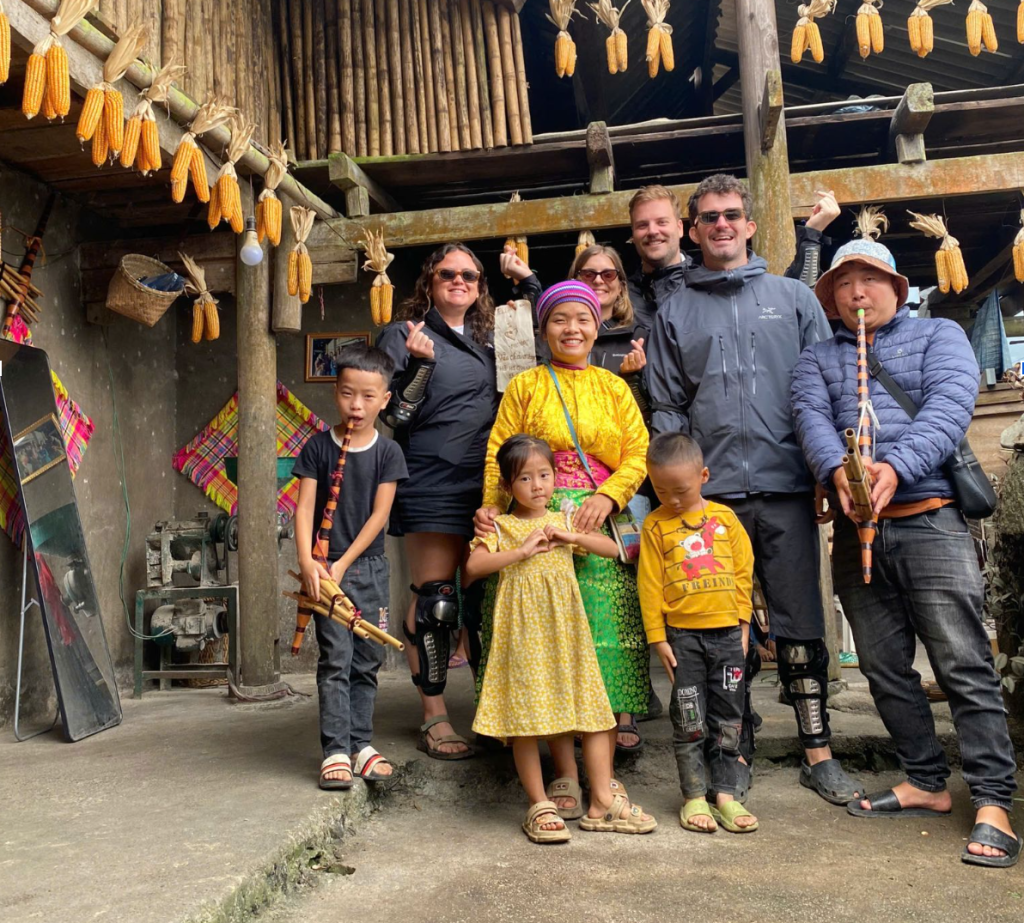
H’Mông People
The Hmong are the largest ethnic group in Ha Giang and the community travellers are most likely to meet across the high limestone plateau. They are especially common around Quan Ba, Yen Minh, Dong Van, and Meo Vac. More than 60% of the population within the Dong Van Karst Plateau UNESCO Global Geopark belongs to the Hmong community.
Their homes: Traditional Hmong houses are usually built low to the ground rather than on stilts. Around the plateau, you may also notice thick stone fences surrounding homes, gardens, and fields.
Their clothing: Traditional outfits often use hemp cloth, indigo dye, embroidery, appliqué, and pleated skirts. Colours and patterns vary between Hmong branches, so not every Hmong outfit looks the same.
Their daily appearance: Full traditional outfits are not worn by everyone every day. On a normal morning, you are more likely to see people working in fields, driving motorbikes, attending school, or selling goods in practical modern clothing.
Their language: Hmong families commonly speak the Hmong language at home and within their community. Vietnamese is often used at school, in government offices, at markets, or when speaking with people from other ethnic groups.
Where they live: Many Hmong villages sit in high, rocky areas where large rice fields are difficult to create. Families often grow corn in small patches of soil between limestone rocks.
How they live: Farming remains an important part of daily life. Corn is used for dishes such as “mèn mén”, for animal feed, and to make local corn wine.
Their music: The khèn, a multi-pipe reed instrument, is one of the clearest symbols of Hmong culture. It is played during festivals, funerals, New Year celebrations, and other community occasions.
Their traditions: Hmong New Year and the Gau Tao Festival are important cultural occasions. These events may include family gatherings, music, games, worship, and traditional clothing.
Where to learn more about the Hmong people: Visit the Hmong King’s Palace in Sa Phin to learn about the history of the Vuong family. Lung Tam is another useful stop for seeing how hemp is prepared, woven, dyed, and made into clothing.
If you’re hopping on a journey with BiBi Tour, our expert guide can also tell you which community lives in each village and help translate when older residents mainly speak Hmong rather than Vietnamese.
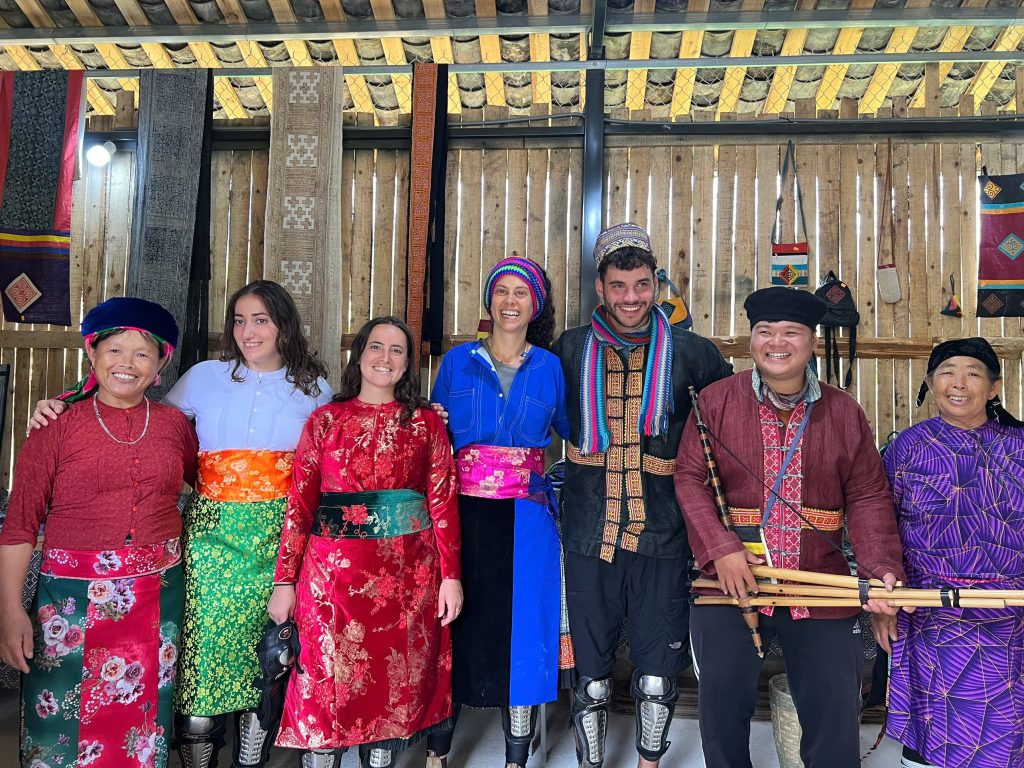
Dao People
The Dao are Ha Giang’s third-largest ethnic group, making up about 14.88% of the provincial population. Dao communities live across many districts, including Hoang Su Phi, Vi Xuyen, Quan Ba, Bac Me, Bac Quang, Quang Binh, and villages near Ha Giang City.
They live in different groups: The Dao in Ha Giang are not one single uniform community. The province has groups such as Red Dao, Dao Tien, White-Trouser Dao, and Long-Tunic Dao, each with different clothing and customs.
Their clothing: Black or dark indigo fabric is often used as the base, with red embroidery, decorative panels, headscarves, and silver jewellery added depending on the Dao group. Some women wear long tunics, while others can be recognised by white trousers or heavily decorated aprons.
Their language: Dao families speak languages from the Hmong-Mien language family. Different Dao groups may use varieties such as Iu Mien or Kim Mun, while Vietnamese is commonly used at school, in towns, and when speaking with other communities.
How they live: Many families grow rice, corn, vegetables, tea, cardamom, and medicinal plants. In Hoang Su Phi, Dao communities are also closely linked with terraced rice farming and forest-based livelihoods.
Their herbal knowledge: The Dao are well known for using leaves, roots, bark, and other forest plants in traditional herbal baths. Recipes vary between families and are usually passed down through generations rather than following one standard formula.
Their music: Pao Dung is a traditional form of Dao singing. It can be heard during ceremonies, weddings, daily work, courtship, and community gatherings, and it was added to Vietnam’s national intangible cultural heritage list in 2024.
Their important ceremony: The cap sac ceremony marks a Dao man’s formal recognition within the community’s spiritual and social traditions. It involves prayers, ritual teachers, offerings, and ceremonies held inside and outside the home.
How can you recognise a Dao community? Look for several of these signs together:
- Dark clothing with red embroidery
- Red headscarves or decorated headwear
- Silver necklaces, bracelets, or buttons
- Long tunics, embroidered aprons, or white trousers
Where travellers can learn more: Nam Dam Village in Quan Ba is one of the most accessible places to learn about Dao culture along the Ha Giang Loop. The village is known for Dao community tourism with different homestays to spend the night at.
Tay People
The Tay are Ha Giang’s second-largest ethnic group, making up about 22.55% of the provincial population. Travellers are more likely to meet Tay communities in lower valleys around Ha Giang City, Vi Xuyen, Bac Me, Bac Quang, and parts of Du Gia rather than on the driest sections of the rocky plateau.
Where they live: Tay villages are often built in valleys near streams, rice fields, and flatter farmland. Thon Tha near Ha Giang City is a clear example, with traditional Tay homes beside low rice terraces and natural water sources.
Their homes: Traditional Tay families commonly live in wooden stilt houses. The raised living area helps separate the household from damp ground, while the space below can be used for tools, storage, or farming work.
How they live: Wet rice farming has long been important in Tay communities. Depending on the village, families may also grow vegetables, raise livestock, manage fishponds, run homestays, or work in tourism.
Their clothing: Traditional Tay clothing is usually made from dark indigo fabric. Compared with the bright patchwork of Lo Lo clothing or the detailed decoration of some Hmong and Dao outfits, Tay clothing often has a simpler cut and fewer visible patterns.
Their language: Tay people have their own language, which belongs to the Tai language family. It is still spoken within families and villages, while Vietnamese is commonly used at school, at work, in towns, and with people from other ethnic groups.
Their main festival: Long Tong, often translated as “going down to the field,” takes place near the beginning of the farming year. It includes prayers for favourable weather, healthy crops, and a successful harvest.
Daily life today: Not every Tay family farms full-time or lives in an old stilt house. Many younger residents study or work in towns, while some households have adapted their homes into homestays and tourism businesses.
|
💡INSIGHT FROM BIBI More than half of BiBi’s drivers, including our founder, are Tay people. Our founder was born in Bac Quang, Ha Giang, and grew up speaking Tay at home. This background gives our team a personal connection to the local communities and allows us to share aspects of Tay culture and daily life from lived experience. |
Lo Lo People
The Lo Lo are one of the smallest ethnic communities in Ha Giang. Travellers are most likely to meet them around Lung Cu, Dong Van, Meo Vac, and villages such as Lo Lo Chai.
They are easier to recognise by their detailed clothing and bronze-drum traditions than by one type of house or farming method. UNESCO lists the Lo Lo among the long-established communities of the Dong Van Karst Plateau.
Where they live: Lo Lo communities are concentrated in a small number of villages in Dong Van, Meo Vac, and Yen Minh. Because their population is much smaller than the Hmong or Tay, you may not meet them on every Loop itinerary.
Their different groups: Ha Giang is home to Lo Lo groups commonly known as the Flower Lo Lo and Black Lo Lo. Their names relate partly to differences in clothing, but their local identity is actually more complex than colour alone.
Their clothing: Lo Lo women’s outfits are among the most detailed in Ha Giang. Small pieces of coloured fabric are cut into triangles, squares, and other shapes, then stitched together to create dense patterns on sleeves, collars, trousers, and jackets.
How to recognise the outfits: Flower Lo Lo clothing usually has brighter blocks of colour and more visible patchwork. Black Lo Lo clothing generally uses a darker base, although it can still include colourful embroidery and fabric panels.
Their language: Lo Lo languages belong to the Tibeto-Burman language family. Different varieties, including Red Lo Lo and Flower Lo Lo, are recorded around Meo Vac, Yen Minh, and Dong Van.
Their homes: In Lo Lo Chai, travellers may see houses built with packed-earth walls and tiled roofs. These homes are grouped closely together near Lung Cu, but house design can vary between villages.
Their bronze drums: Bronze drums are one of the strongest symbols of Lo Lo culture. They are used during important community and spiritual occasions, especially funeral ceremonies, rather than as everyday musical instruments.
Nung People
The Nung are Ha Giang’s fifth-largest ethnic group, accounting for about 9.53% of the provincial population. Their communities are mainly found in lower valleys and farming areas around Bac Quang, Quang Binh, Vi Xuyen, Bac Me, and parts of Quan Ba.
Where they live: Nung families often settle in valleys, foothills, and areas with enough water for wet rice farming. Their villages are generally found at lower elevations than the Hmong settlements of Dong Van and Meo Vac.
Their homes: Traditional Nung houses may be built on stilts or directly on the ground, depending on the local area. Wood, bamboo, earth, and roof tiles are commonly used materials.
Their clothing: Traditional clothing usually uses dark indigo or black fabric. Women may wear a long blouse with trousers, a headscarf, silver jewellery, and coloured details around the collar, sleeves, or buttons.
Their blacksmithing techniques: Some Nung communities are traditionally known for their blacksmithing. The tradition dates back over 300 years, when they were initially used to forge weapons for the Nung chiefs against invaders, and later evolved into everyday tools. Now, the tradition lives on as the products made into daily life like highly durable and razor-sharp agricultural and domestic tools, including bush-cutters, cleavers, kitchen knives, and scissors
Their festivals: Nung communities may celebrate Long Tong, or the “going down to the field” festival, near the beginning of the farming season. Activities differ by village but can include prayers for good weather, farming ceremonies, games, singing, and shared meals.
Traditional Clothing of Ha Giang Ethnic People
Traditional clothing is one of the easiest ways to notice Ha Giang’s cultural diversity. At a Sunday market, you may see several communities standing beside one another, each using different fabrics, colours, headwear, and sewing techniques.
|
Ethnic group |
Main clothing features |
Easiest detail to notice |
|
Hmong |
Hemp cloth, pleated skirts, indigo dye, embroidery, and fabric appliqué |
Pleated skirts and detailed geometric patterns |
|
Dao |
Dark clothing with red embroidery, decorated headwear, and silver jewellery |
Red headscarves or red details on dark fabric |
|
Tay |
Plain dark-indigo clothing with a simple cut and little decoration |
A clean, understated indigo outfit |
|
Lo Lo |
Small coloured fabric pieces stitched into dense geometric designs |
Bright mosaic-like patchwork |
|
Nung |
Dark-indigo shirts and trousers, sometimes with coloured edging or silver accessories |
Similar to Tay clothing, but details differ by local group |
Local Markets: Where Ha Giang’s Communities Come Together
Local markets in Ha Giang are not mainly built for tourists. They are weekly meeting points where families buy food, sell farm products, trade livestock, repair tools, and catch up with relatives from nearby villages.
They are also one of the easiest places to see several ethnic communities in the same space. Hmong, Dao, Tay, Giay, Nung, Lo Lo, and other residents may come from different villages, often wearing a mix of practical modern clothes and traditional pieces.
Here are some main markets along the Ha Giang Loop that are visitor-friendly in general:
|
Market |
When it is usually held |
What travellers may notice |
|
Every Saturday morning |
Local Tay and Hmong people buying and selling fresh produce, livestock, traditional clothing, handmade goods, and everyday items. |
|
|
Sunday morning |
Food stalls, clothing, vegetables, household goods, and visitors from surrounding villages |
|
|
Sunday morning |
A large livestock area, farm products, local food, clothing, and corn wine |
|
|
Regular district market days |
Produce, everyday supplies, clothing, and goods for nearby farming communities |
|
|
Every six days |
A rotating market that may fall on a different weekday each cycle |
Compared to the cities’ markets, what’s happening in Ha Giang markets are more vibrant, filled with sensory overload of colorful ethnic textiles. The most energetic times are usually around 6:00 AM – 8:00 AM.
- Families come to buy fresh vegetables, pork, chicken, rice, spices, dried foods, and other ingredients that may be difficult to find in smaller mountain villages.
- Farmers sell produce from their own land, including ginger, bamboo shoots, corn, rice, seasonal vegetables, honey, and homemade corn wine.
- Livestock trading is a major part of some markets, especially in Meo Vac. Buyers inspect cattle, pigs, goats, and chickens before discussing the price with sellers.
- People also shop for practical household goods such as farming tools, kitchen equipment, shoes, fabric, jackets, baskets, and motorbike supplies.
- Market day gives relatives and friends from different villages a chance to meet. For people living in remote areas, this may be one of the few regular opportunities to talk, eat together, and exchange local news.
How to visit Ha Giang markets respectfully?
- Plan your trip around market days: If you want to visit some of Ha Giang’s larger and more well-known markets, such as Dong Van Market or Meo Vac Market, plan to be there on a Sunday. For a typical Ha Giang Loop itinerary, this means starting your tour on Saturday so you can reach the area in time for the Sunday market.
- Ask before taking a close photo of a vendor, shopper, or child. A smile and a simple gesture toward your camera are often enough, but accept a refusal without trying again.
- Bargain politely when it is appropriate, but do not push hard over a small amount. Paying a fair price supports local households and keeps the exchange comfortable for both sides.
- Avoid touching food, fabric, tools, or handmade items unless the seller invites you to. Ask for the price first and handle products carefully.
- Try local food with an open mind, but ask your guide about the ingredients when you have allergies or dietary restrictions. Some dishes may contain offal, fermented ingredients, or strong local alcohol.
Festivals and Traditions
Festivals in Ha Giang are usually linked to the lunar calendar, so note that Gregorian dates change every year. Some are also organised on different days by different villages, which means travellers should not treat one past event date as a permanent annual schedule.
Major festivals at a glance:
|
Festival |
Ethnic community |
Usual time |
What it represents for |
|
Gau Tao Festival |
Hmong |
Usually during the first lunar month, often around the early New Year period |
A family or community asks for health, children, good fortune, or gives thanks after a wish has been fulfilled |
|
Long Tong Festival |
Tay and some Nung communities |
Usually in the first lunar month, after Lunar New Year |
The community asks for favourable weather, healthy crops, peace, and a successful farming year |
|
Pa Then Fire Dancing Festival |
Pa Then |
Commonly held after the rice harvest; the associated pestle-pulling festival is traditionally held on the 16th day of the 10th lunar month |
The ceremony gives thanks after the harvest and expresses the community’s spiritual connection with fire, protection, and strength |
|
Hmong New Year |
Hmong |
Around the end of the old farming year and the beginning of the new year; local timing may differ from Vietnamese Tet |
Families honour ancestors, rest from farm work, prepare new clothes, meet relatives, and welcome a new agricultural cycle |
|
Khau Vai Love Market Festival |
Several local ethnic communities |
The 27th day of the third lunar month each year |
A yearly meeting place connected with an old local love story, where former partners, friends, and visitors gather without disrupting current family life |
Food from Different Ethnic Communities
Food in Ha Giang is shaped by altitude, climate, and what families can grow in mountain areas. For example, corn is more common on the rocky plateau, while rice appears more often in lower valleys with better access to water.
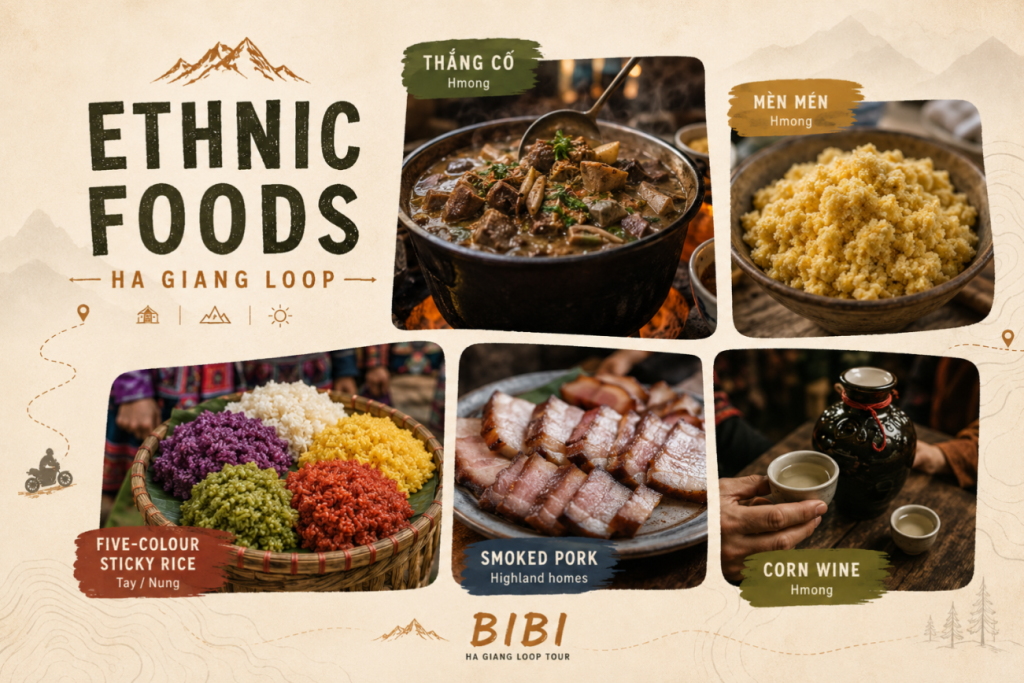
Thắng cố: Thắng cố is a hot stew traditionally made with meat, bones, and offal, along with local herbs and spices.
Mèn mén: Mèn mén is made by grinding dried corn into flour, adding water, and steaming it more than once. Visitors may find the flavour plain at first. That is because it developed as a filling everyday food, not as a sweet snack or restaurant dish.
Five-colour sticky rice: Five-colour sticky rice is made by colouring separate portions of glutinous rice with leaves, roots, or other natural plant ingredients. It is more likely to appear at festivals, weddings, New Year celebrations, and important family meals than as an everyday breakfast.
Smoked pork: In many mountain homes, pork is hung above the kitchen fire so smoke and heat can help preserve it. From that, the meat develops a firm texture and smoky flavour. In order to enjoy a meal, it can be boiled, fried, or cooked with vegetables before serving.
Corn wine: Corn wine is made by fermenting cooked corn with a local yeast mixture before distillation.
Can You Visit Local Villages?
Yes. Many villages in Ha Giang welcome travellers through homestays, craft workshops, guided walks, and community tourism projects. Places such as Lo Lo Chai, Nam Dam, Du Gia, Lung Tam, and Ha Thanh are among the easier villages to include in a Ha Giang trip. Here are some things to do while visiting Ha Giang local villages:
- Stay overnight in a family-run homestay and experience a simpler style of accommodation than a city hotel.
- Join a family-style dinner with dishes prepared by the host, often using local rice, vegetables, pork, herbs, or corn products.
- Visit weaving or embroidery workshops where local women explain how hemp, indigo dye, or decorative fabric is prepared.
- Walk through the village with a guide who can explain the house design, farming methods, local language, and community customs.
With BiBi, overnight stays are usually arranged at a clean local hostel. Travellers can normally choose between a bunk bed in a shared room or a private bedroom, depending on the property and availability. Overall, you can be guaranteed with clean bedding, bathrooms, hot showers, and a comfortable area for dinner and rest. Private rooms suit couples or travellers who want more space, while bunk rooms are a more social and budget-friendly option.
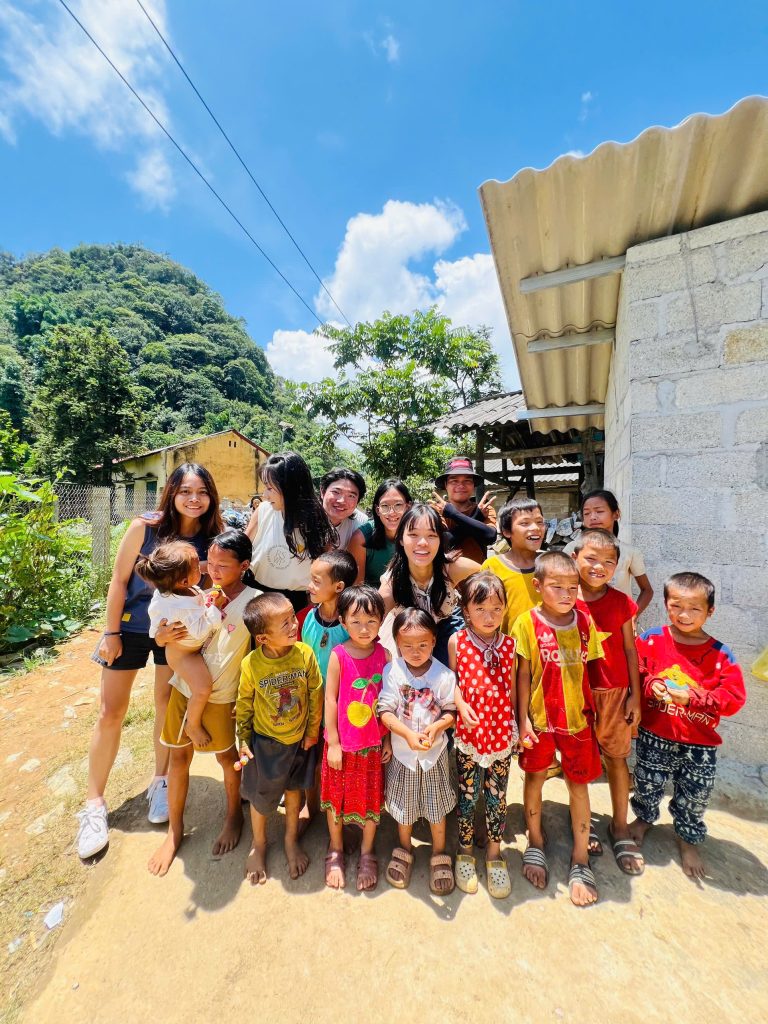
Responsible Cultural Tourism
Visiting ethnic villages should feel like entering someone’s community, not walking through an attraction. People are working, raising children, farming, cooking, and spending time with their families while travellers pass through.
A few simple choices can make the visit more respectful and help tourism bring real value to local households.
- Ask before taking a close photo of a person, especially children, older residents, or anyone wearing traditional clothing. A smile and a small gesture towards your camera are usually enough to ask.
- May not enter houses, kitchens, fields, workshops, or animal areas unless the owner or your guide invites you. An open door does not always mean visitors are welcome inside.
- Keep your voice low when walking through villages early in the morning or late at night. Many families live close together, and sound carries easily between homes.
- Dress in practical, modest clothing when visiting homes, ceremonies, or places of worship. Remove your shoes when the host asks you to.
- Avoid touching family altars, ceremonial objects, musical instruments, traditional clothing, or handmade tools without permission.
- Stay on marked paths around rice fields, corn plots, and vegetable gardens. These are working areas and an important source of food and income for local families.
- Do not bargain aggressively over a small amount. Handmade clothing and textiles can take weeks or months to complete, so the price often reflects both the materials and the time involved.
Frequently Asked Questions
Which is the largest ethnic group?
The Hmong are the largest ethnic group in Ha Giang, accounting for about 34.24% of the provincial population in 2019. They are especially common across the northern plateau districts of Quan Ba, Yen Minh, Dong Van, and Meo Vac.
Can tourists stay in ethnic minority villages?
Yes. Travellers can stay in villages such as Lo Lo Chai, Nam Dam, Du Gia, Lung Tam, and Ha Thanh, where local families operate homestays, hostels, craft workshops, and food services.
On BiBi tours, overnight stays are usually arranged at a clean local hostel. Guests can often choose between bunk beds in a shared room or a private bedroom, depending on availability.
What language do local people speak?
Vietnamese is commonly used at school, in government offices, at markets, and between people from different ethnic groups. However, many families mainly speak their own ethnic language at home.
You may hear Hmong, Tay, Dao, Nung, Giay, Lo Lo, La Chi, and other local languages along the Loop. Older residents in remote villages may speak limited Vietnamese, so a local guide can make conversations much easier.
Are the traditional clothes worn every day?
Not always. Modern clothing is common in daily life, while traditional outfits are more often worn at markets, festivals, weddings, ceremonies, and cultural events.
Which villages are best for experiencing local culture?
It depends on the community you want to learn about. Lo Lo Chai is known for Lo Lo culture, Nam Dam for Dao traditions, Du Gia for Tay homestays, Lung Tam for Hmong weaving, and Ha Thanh for Tay village life.
A longer four-day Loop tour usually gives you more time for village walks and conversations than a faster three-day itinerary.
Is it respectful to take photos of local people?
It can be, as long as you ask first. A smile and a small gesture towards your camera are often enough, but you should accept a refusal without asking again.
Always be more careful when photographing children, ceremonies, people inside their homes, or anyone wearing traditional clothing. When travelling with BiBi, your guide can help ask permission and explain when photography may interrupt a private or spiritual moment.
Experience Ha Giang Loop with The Local Experts
At BiBi Ha Giang Loop Tour, our local guides help you understand the places you pass rather than just stopping by for photos.
What BiBi Offers:
- 2-Day 1-Night tours for travellers with limited time.
- 3-Day 2-Night tours for a more balanced Loop experience.
- 4-Day 3-Night tours for a slower journey with more time for villages and local culture.
- Easy Rider tours for travellers who prefer to ride with an experienced local driver
- Self-riding tours for confident riders who want more independence on the road
YOUR HA GIANG ADVENTURE STARTS HERE